Innovation Leads the Trend, Quality Drives Value

In modern fabrication and machining workshops, drilling large or heavy workpieces can be challenging when using conventional drilling equipment. This is where a radial drilling machine stands out. Its unique design allows operators to position the spindle over the workpiece rather than moving the workpiece itself, making it an efficient solution for industrial manufacturing, maintenance, and metal fabrication applications.
Understanding the radial drilling machine working principle can help buyers, engineers, and machine operators choose the right equipment and maximize productivity.
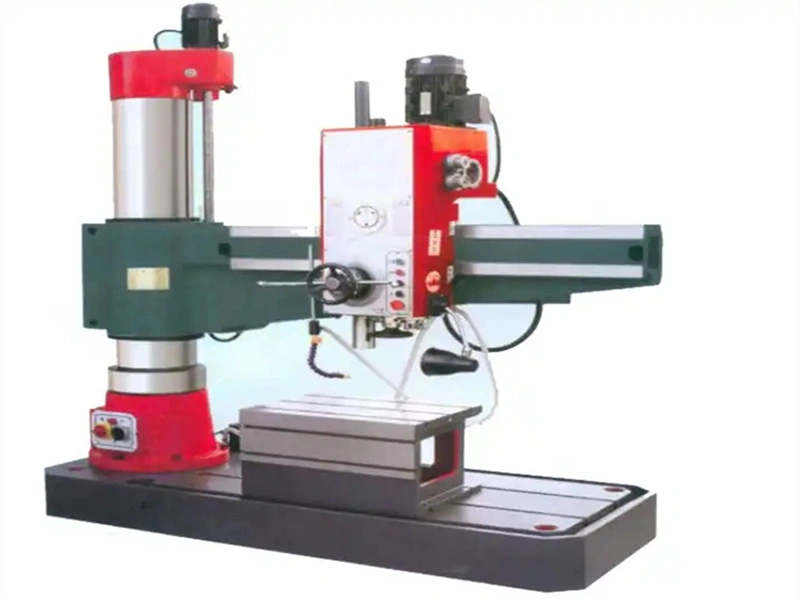
The radial drilling machine working principle is based on the movement of a drilling head along a horizontal arm that can rotate around a vertical column. Unlike a standard drill press, the machine provides multiple directions of movement, allowing the drill spindle to reach different positions without relocating the workpiece.
The main working sequence typically includes:
Component | Function |
Base | Supports the machine and workpiece |
Column | Provides vertical support for the radial arm |
Radial Arm | Moves up and down and rotates around the column |
Drill Head | Travels along the radial arm |
Spindle | Holds and rotates the cutting tool |
During operation, the workpiece is securely clamped on the machine table or base. The operator positions the drill head by adjusting the radial arm and spindle location. Once aligned, the spindle rotates the drill bit while applying downward feed pressure to create the hole.
This design enables drilling, reaming, tapping, countersinking, and boring operations on large components with minimal setup time.
A key advantage of the radial drilling machine working principle is its flexibility. The machine can achieve several movements simultaneously:
· Radial arm rotation around the column
· Vertical movement of the radial arm
· Horizontal travel of the drill head along the arm
· Spindle rotation and feed motion
Because of these movements, operators can access multiple drilling locations on a large workpiece without repositioning it repeatedly. This reduces handling time and improves overall production efficiency.
For industries working with heavy steel structures, machine frames, molds, and fabricated components, this flexibility is often a major productivity advantage.
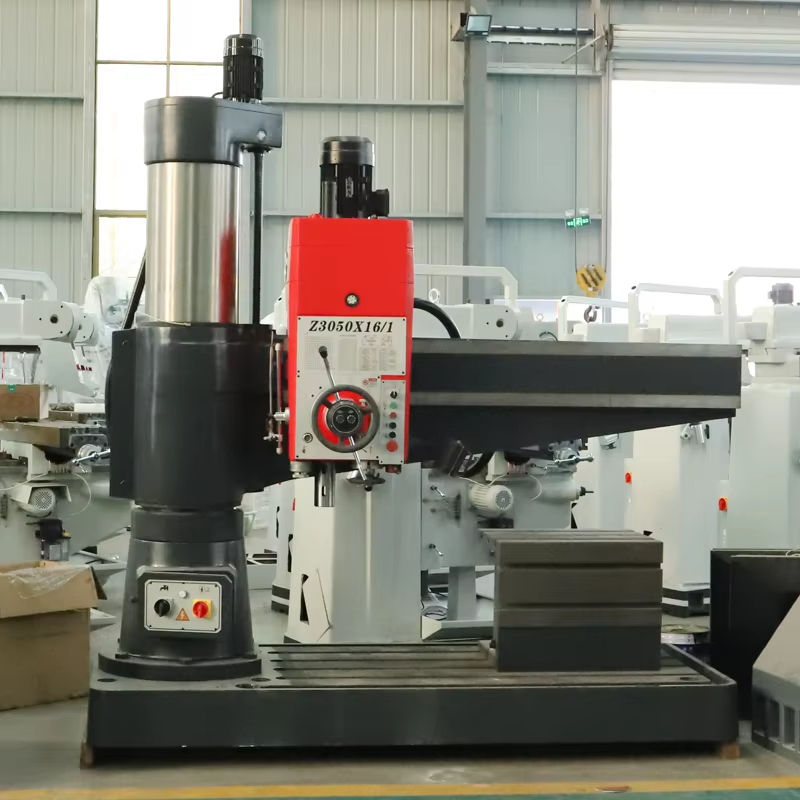
The radial drilling machine working principle makes the equipment suitable for a wide range of manufacturing sectors.
Common applications include:
· Steel structure fabrication
· Construction machinery production
· Shipbuilding
· Automotive component manufacturing
· Agricultural equipment manufacturing
· Maintenance and repair workshops
For example, when drilling multiple holes on a large welded frame, operators can simply reposition the drill head across the workpiece. This eliminates the need for frequent lifting or repositioning of heavy parts.
Many modern machines also incorporate hydraulic clamping systems and variable spindle speeds, improving operational efficiency while maintaining drilling accuracy.
Many buyers wonder whether a radial drilling machine is worth the investment compared to a standard drill press.
Here is a simple comparison:
Feature | Radial Drilling Machine | Conventional Drill Press |
Workpiece Size | Large and heavy | Small to medium |
Drill Head Movement | Multiple directions | Limited |
Setup Time | Lower for large parts | Higher |
Flexibility | Excellent | Moderate |
Industrial Applications | Extensive | Limited |
For workshops that regularly process oversized components, the radial drilling machine often provides better efficiency and lower labor requirements.
To achieve the best results, operators should follow several best practices:
· Inspect the machine before each shift.
· Keep guideways and moving parts properly lubricated.
· Select appropriate spindle speeds for different materials.
· Ensure the workpiece is securely clamped.
· Regularly check spindle alignment and feed mechanisms.
Routine maintenance not only improves machining accuracy but also extends machine life and reduces unexpected downtime.
The radial drilling machine working principle is designed around flexibility, precision, and efficient handling of large workpieces. By allowing the drill head to move across multiple axes while keeping the workpiece stationary, the machine significantly improves productivity in industrial drilling operations.
Whether used in fabrication shops, machinery manufacturing plants, or maintenance facilities, a radial drilling machine remains one of the most practical solutions for processing large and heavy components. Understanding how it works can help businesses select the right equipment and achieve more efficient production workflows.
A radial drilling machine works by moving the drill head along a rotating radial arm, allowing the spindle to reach different drilling positions without moving the workpiece.
The main components include the base, column, radial arm, drill head, spindle, and work table.
Its movable drill head and rotating arm make it easier to drill multiple holes on large or heavy components without repositioning the workpiece.
Besides drilling, it can perform tapping, reaming, countersinking, spot-facing, and boring operations.
Industries such as metal fabrication, construction equipment manufacturing, shipbuilding, automotive production, and machinery repair frequently use radial drilling machines.

This is the first one.
 English