Innovation Leads the Trend, Quality Drives Value

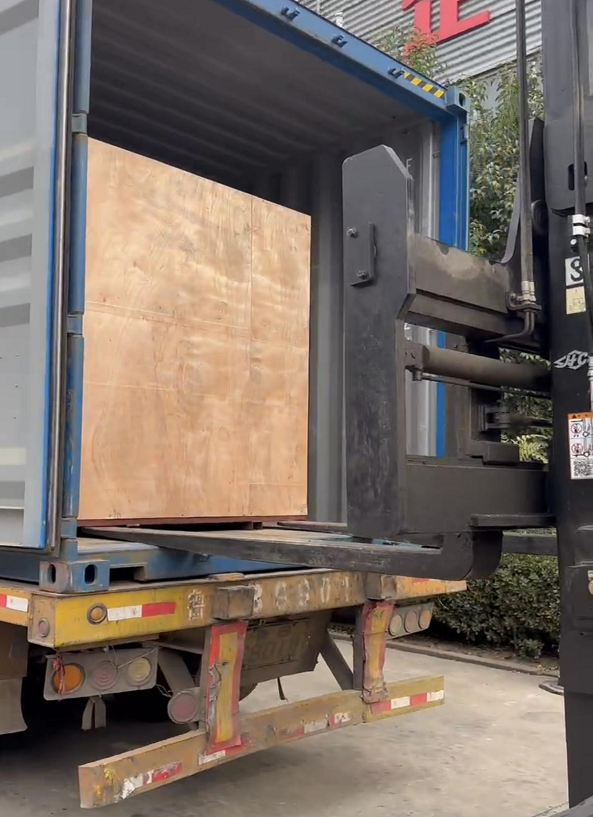
Yesterday afternoon, four horizontal lathes—two CA6140s and two CA6150s—with brand-new protective coatings, sat securely on forklift forks and were loaded into containers. They are about to cross the ocean to a customer's factory in Vietnam, injecting "industrial blood" from China into the local manufacturing industry.
The CA6140 model has a maximum workpiece rotation diameter of 400 mm and a spindle bore diameter of 52 mm, suitable for machining small to medium-sized shafts and discs. It is renowned for its high cost-effectiveness and ease of operation, and is standard equipment in many machine repair workshops and vocational school training bases.
The CA6150 model has a maximum rotation diameter increased to 500 mm and a spindle bore diameter of 82 mm (105 mm optional), capable of machining larger pipes and forgings. Its reinforced spindle bearings and wide guideways allow it to maintain a repeatability accuracy of 0.01 mm even under heavy cutting. The customer for this order is a comprehensive machinery service provider who needs both precision hydraulic valve cores (a strength of the CA6140) and large-diameter mining equipment bushings (the CA6150's forte). The shipment of four machines together perfectly covers the customer's entire process from rough turning to finish turning.
Yesterday around 4pm, the last CA6150 lathe was smoothly loaded into the container. Inside, workers performed final securing and rust prevention:
the sliding guide surfaces of each lathe were coated with volatile rust-preventive oil and covered with neutral paraffin paper; the anchor bolt holes and electrical interfaces were sealed with plugs;
the four bottom corners were locked to the container floor with adjustable wedge-shaped rubber blocks and then secured in an "X" shape with 12mm diameter steel wire tensioners. This ensures the stability and safety of the machines during transport.
These two lathe models have been in production since the 1980s, with cumulative sales exceeding one million units. They lack the fancy interface of CNC machine tools, but thanks to their high rigidity, ease of maintenance, and adaptability to different cutting tools and blanks, they remain the first choice for many developing countries to start their industrialization.

 English