Innovation Leads the Trend, Quality Drives Value

In modern mechanical manufacturing, the universal milling machine plays an indispensable role as a key metal-cutting device. Its outstanding flexibility and adaptability make it an essential tool for producing a wide range of parts, from simple flat surfaces to complex components requiring intricate detailing. This machine has become a cornerstone for companies seeking to improve production efficiency while maintaining high product quality. For industries where precision and productivity must coexist, the universal milling machine has proven to be a powerful and versatile solution.
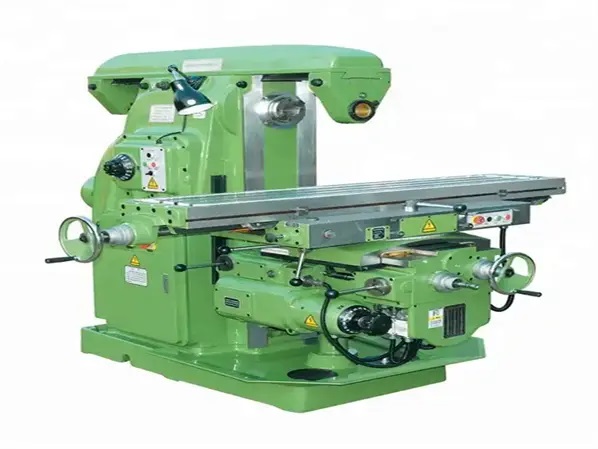
The scope of universal milling machine uses is remarkably wide, making it one of the most versatile tools in a workshop. In automotive manufacturing, it is relied upon to produce gears, shafts, and housings with high accuracy. In aerospace, the machine is used to craft intricate parts that must withstand extreme operating conditions. In tool-making industries, the universal milling machine ensures the creation of molds and dies with exact specifications. Even in smaller workshops, it supports the machining of prototypes and custom parts with excellent repeatability. Such adaptability is why many manufacturers see it not merely as a machine, but as a central part of their production strategy.
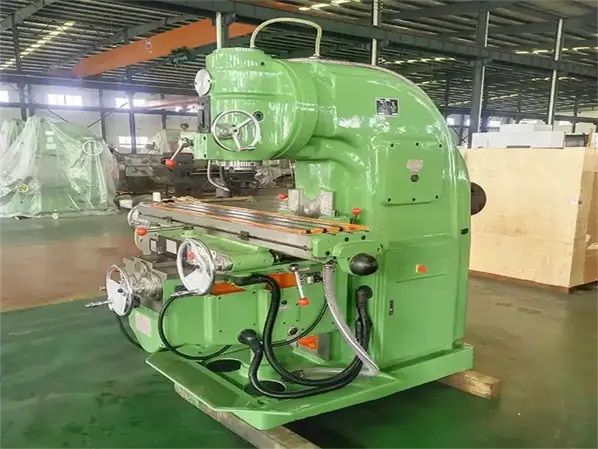
Understanding the milling machine function helps explain why it is such a valuable tool. The universal milling machine operates by rotating a cutting tool against a workpiece to remove material and shape it according to design requirements. Unlike conventional machines that focus on a single task, the universal milling machine is designed with multiple axes and adjustable components that enable it to perform a variety of machining operations. These include face milling, angular milling, slotting, drilling, and contouring. This flexibility means a single machine can perform the work of several specialized devices, saving both space and investment while improving operational efficiency.
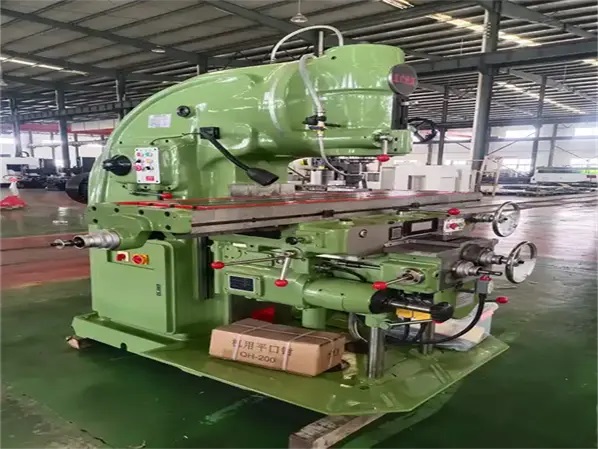
When comparing a universal milling machine with a conventional milling machine, the differences in versatility and efficiency become clear.
Aspect | Universal Milling Machine | Conventional Milling Machine |
Versatility | Capable of multiple machining tasks including angular and helical cuts | Limited to basic operations such as flat and slot milling |
Adaptability | Adjustable table and spindle angles for complex geometries | Restricted movement and fewer adjustments |
Efficiency | Reduces need for multiple machines, saving space and cost | Requires several machines for varied tasks |
Precision | Maintains accuracy across complex machining processes | High accuracy but only in limited applications |
Industrial Applications | Widely used in automotive, aerospace, and tooling industries | Suitable mainly for simpler workshop operations |
This comparison highlights why manufacturers increasingly choose the universal milling machine as a multi-functional tool, enabling them to streamline processes without compromising accuracy or quality.
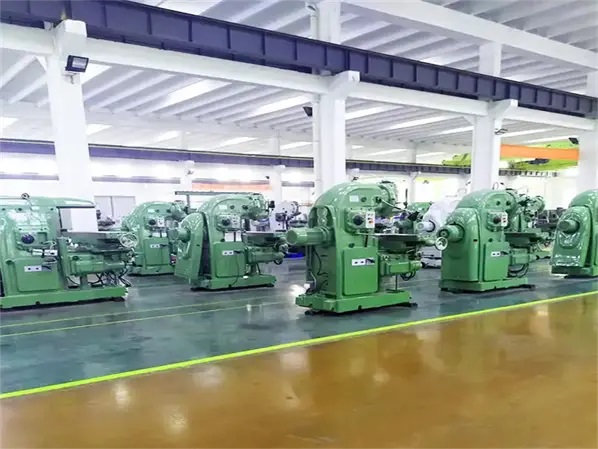
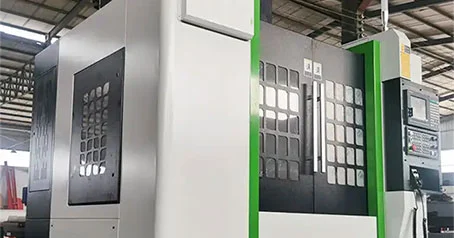
Among the companies that manufacture and support advanced workshop equipment, ShanQuan stands out for its commitment to precision engineering and customer satisfaction. In ShanQuan's production workshop, experienced engineers and technicians ensure every machine, including the universal milling machine, is built to the highest standards of reliability and performance. Each production line is designed to optimize efficiency and sustainability, helping clients reduce waste while improving output.
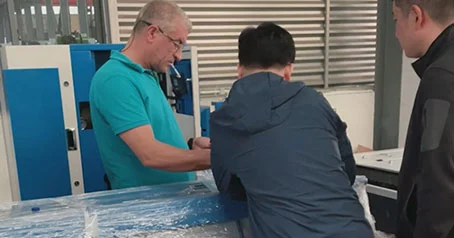
Furthermore, ShanQuan emphasizes long-term partnerships by offering comprehensive after-sales service and technical assistance. Clients not only receive high-quality equipment but also benefit from continuous improvement support, ensuring that their milling machine function remains at peak performance throughout its lifespan. By choosing ShanQuan, businesses gain more than a machine—they gain a trusted partner in sustainable growth and innovation. Unlock the full potential of your metal fabrication needs with our trusted advanced metalworking solutions.

 English